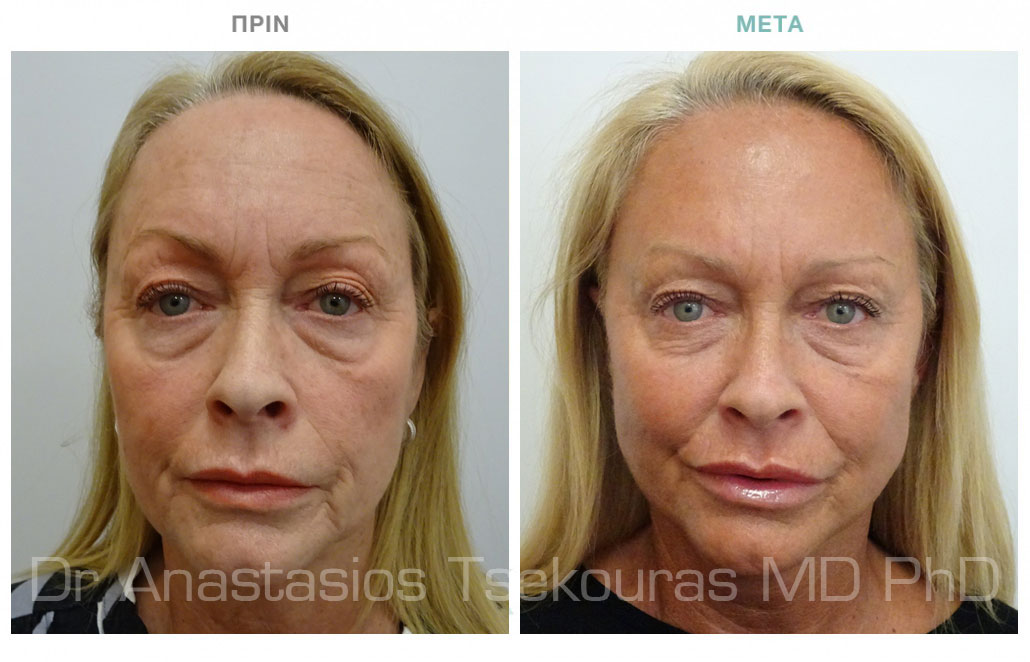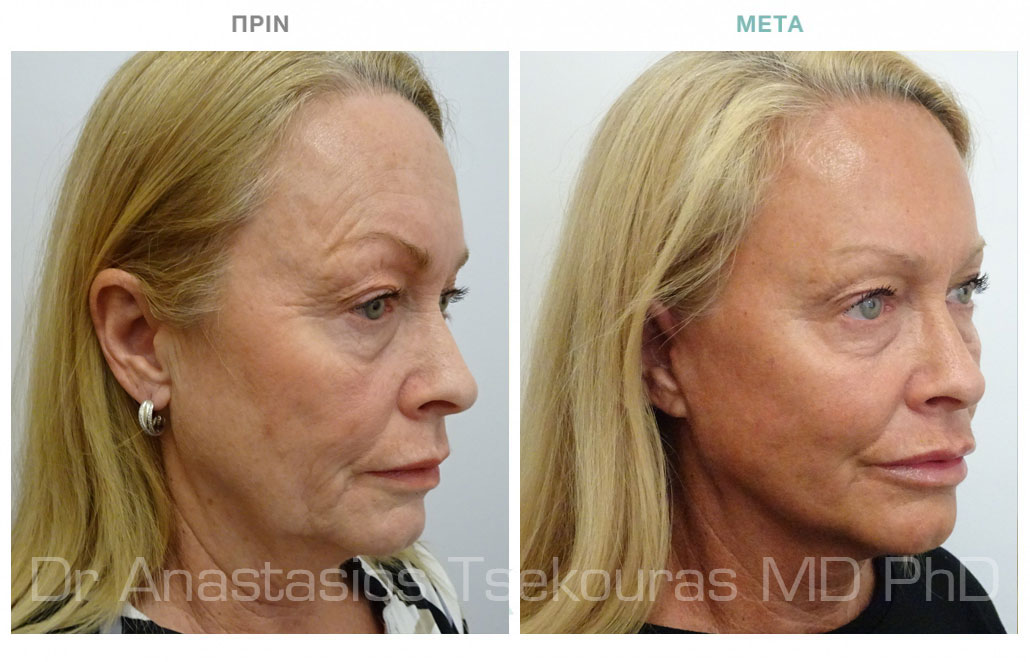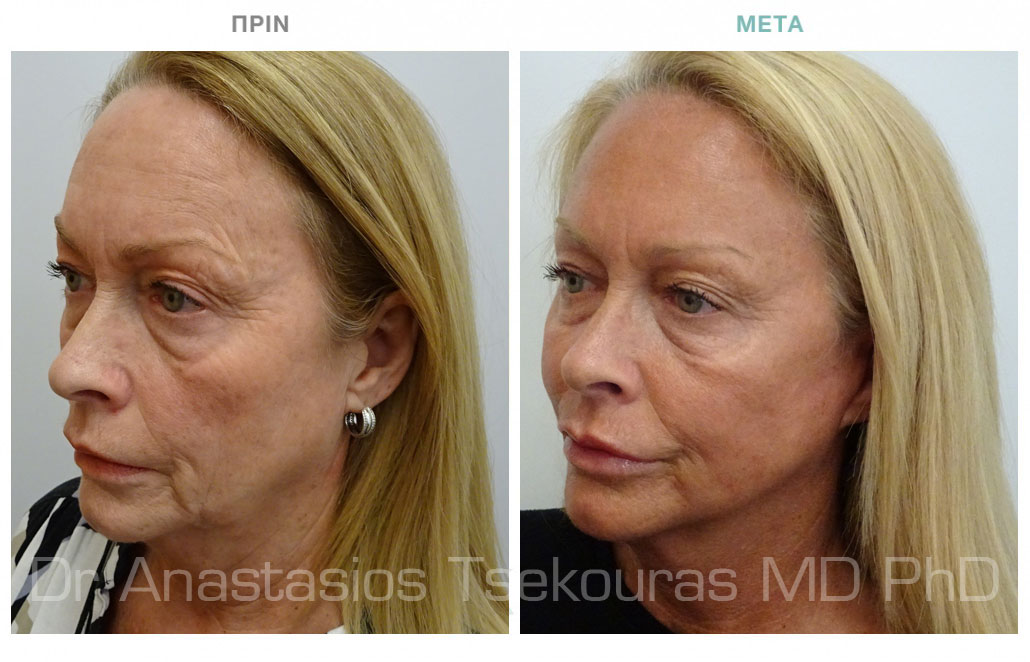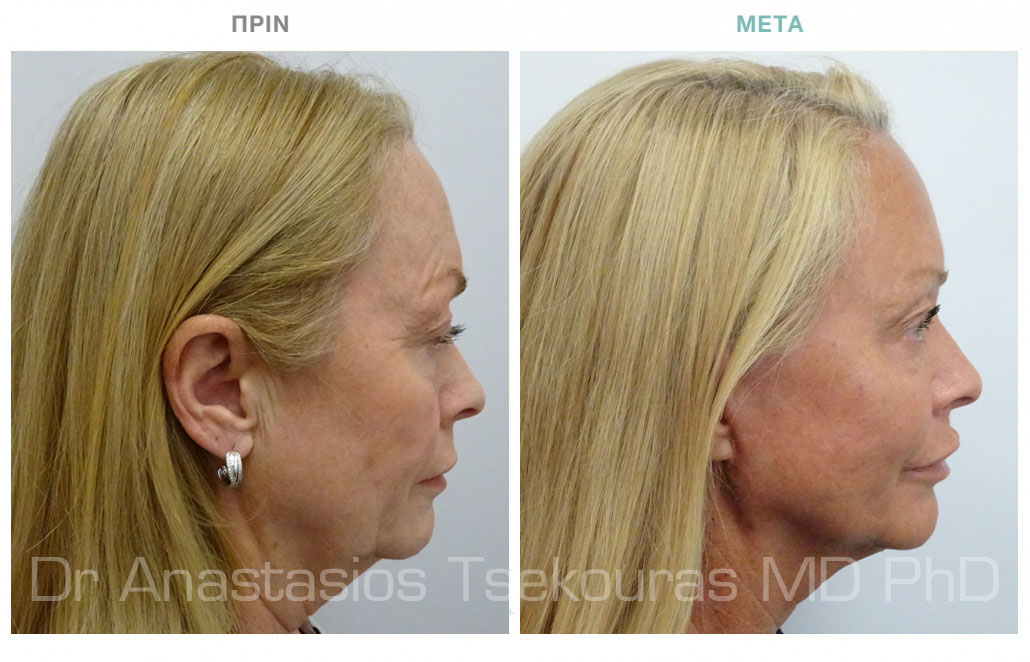

-
Ideal candidate age
50-55 years old -
Type of treatment
Invasive -
Duration of surgery
3 hours -
Length of hospital stay
1-2 days -
Anesthesia
General -
Return to everyday activities
7-10 days -
Duration of results
10-15 years, depending upon habits, skin quality, as well as the face’s natural form of expressiveness
Traditional Face Lift
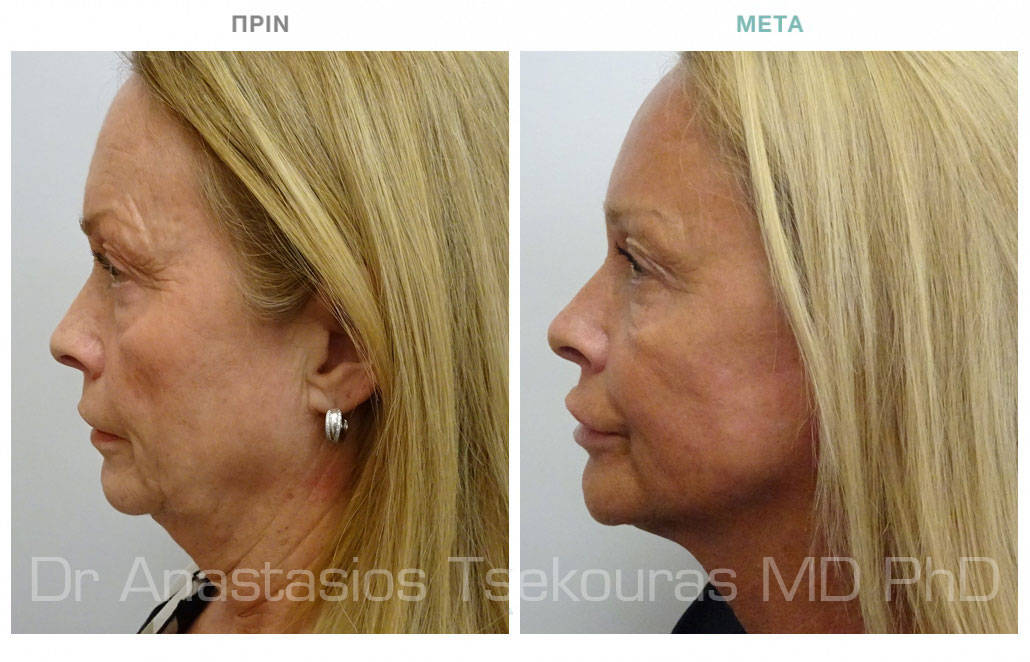
The Traditional Facelift, also known as rhytidectomy, is the surgical approach that rejuvenates the face and neck in cases of excessive sagging skin due to ageing. It is mainly recommended to women aged 50 and over with impressive results that lasts for many years.
This surgical approach helps improve the overall facial and neck appearance, thus creating a younger result by enhancing the contour and the profile.
Traditional Facelift technique
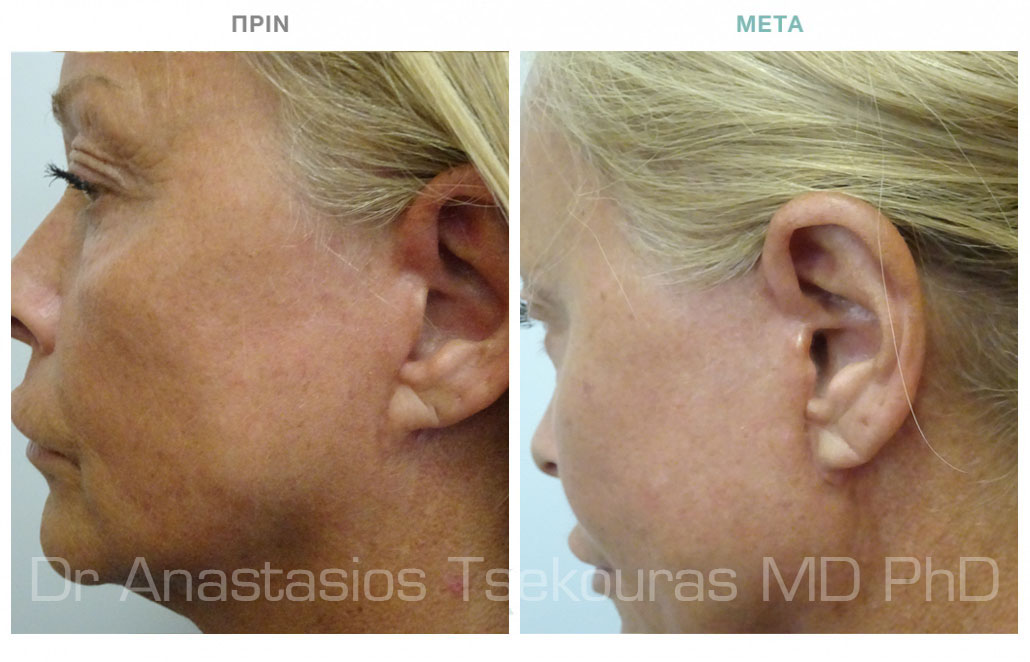
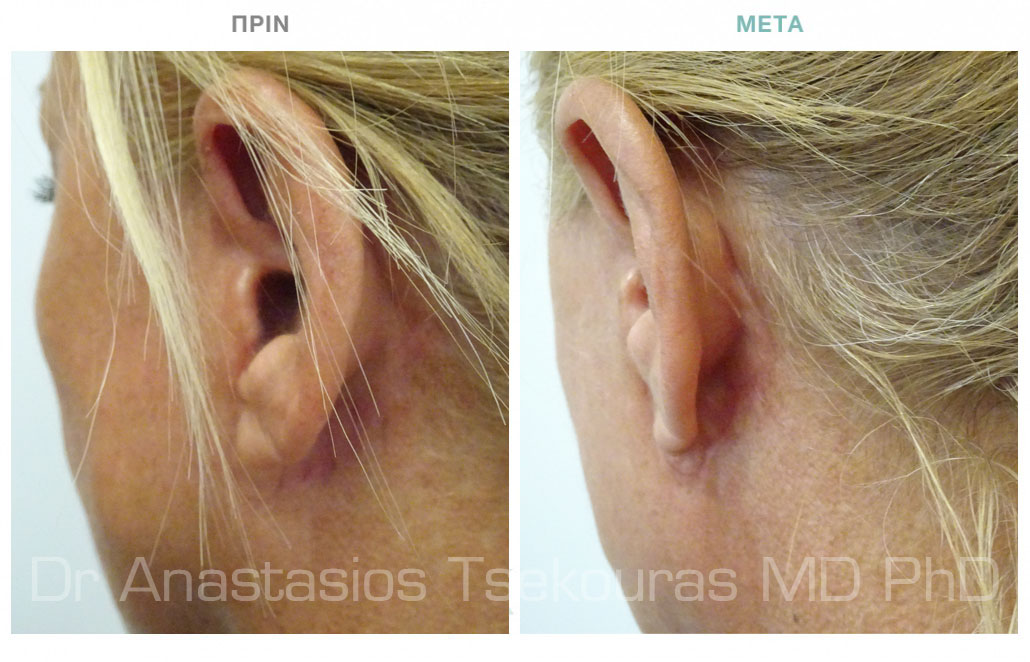
The Traditional Facelift technique involves the removal of excess skin as well as tightening of the skin and muscle tissues. After the removal of excess skin, the skin is re-draped and sutured or stapled in place. The incisions are behind the ears and scalp hairline and are not visible, while they also fade in time.
In order to produce more natural and long-lasting results, facelift surgery is combined with the tightening of the facial and neck muscles (SMAS Lift technique), which also restores the tissues and structure of the face in place.
New facelift techniques allow for smaller incisions and provide longer-lasting results.
What to expect after surgery
- During the first days following surgery, staying at home is recommended. You should also try eating soft food, staying calm and keeping your face hydrated.
- Healing is a gradual process. You should expect bruising and swelling within the first days after surgery, which will gradually subside, while the face will fully recover after 10-12 weeks.
- Direct sun exposure should be avoided.
Risks and Side Effects
Choosing a qualified and experienced plastic surgeon to perform the operation minimizes the possibilities of risks and side effects. However, possible complications and risks include a sense of numbness behind the ears, temporary skin discoloration around the incisions, and dysfunction to the nerves that controls facial muscles, which is usually temporary. All the above gradually subside and eventually return to normal.
Useful information
- The pain is usually minimal and easily controlled with painkillers.
- The sutures will gradually be removed within two weeks after surgery to minimize scarring.
- Good skin quality helps post-operatively and contributes significantly to the final result. Patients with very dehydrated skin before surgery can improve overall skin quality by increasing hydration with facial and laser treatments.
- Quitting smoking 1-2 weeks before and after your surgery helps achieve quick and proper healing.