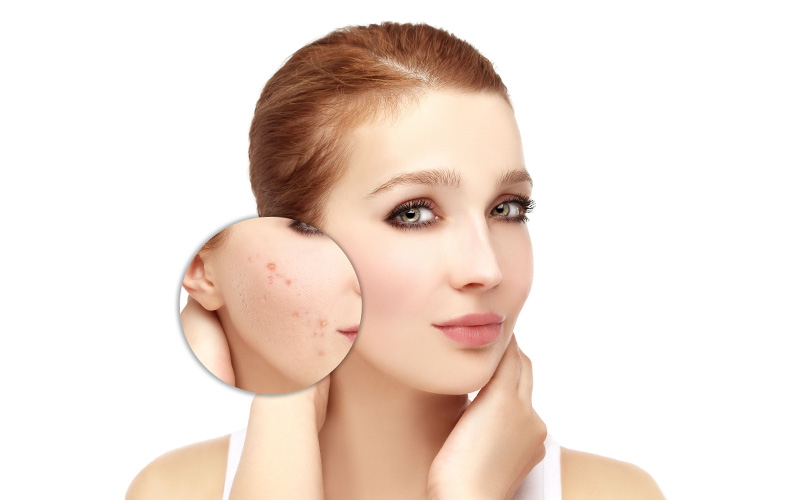
Acne is one of the most common skin conditions that affect mainly teenage boys and girls, but it also appears in adults.
This makes acne a chronic inflammatory disease that needs to be treated effectively both during and after it has gone away, if it has left acne scars on the face or body.
There are several factors that cause acne scars, but the problem starts with the excessive secretion of the sebaceous glands that abound on the face and back.
Depending on the type of acne of the individual (mild, moderate or severe), in combination with their gender, age and medical history, different treatment protocols are applied.
Laser technology can be used to treat acne both as part of a treatment protocol and also as a means to improve acne scarring that often remain after treatment.
Smooth Beam laser, an excellent choice for patients with active acne, penetrates under the surface of the skin into the dermis, aims to inactivate the sebaceous glands, so as to stop them from overproducing sebum and to restore normal levels. At the same time, it destroys the bacteria associated with acne and enhances collagen production.
When our goal is mainly to reduce acne scarring, then we use the INFINI laser, the most advanced form of non-invasive laser that uses micro-needling fractional radiofrequency (Fractional RF), and provides scar reduction through precise 3D treatments.
Based on your individual needs, the number of sessions varies from 6 to 8.
Modern advances in laser technology lead to permanent results for all scar types, while also improve the overall appearance of the skin.
We use cookies to improve your experience on our site. By using our site, you consent to cookies.
Manage your cookie preferences below:
Essential cookies enable basic functions and are necessary for the proper function of the website.
These cookies are needed for adding comments on this website.
Google Tag Manager simplifies the management of marketing tags on your website without code changes.
You can find more information in our Cookie Policy and .