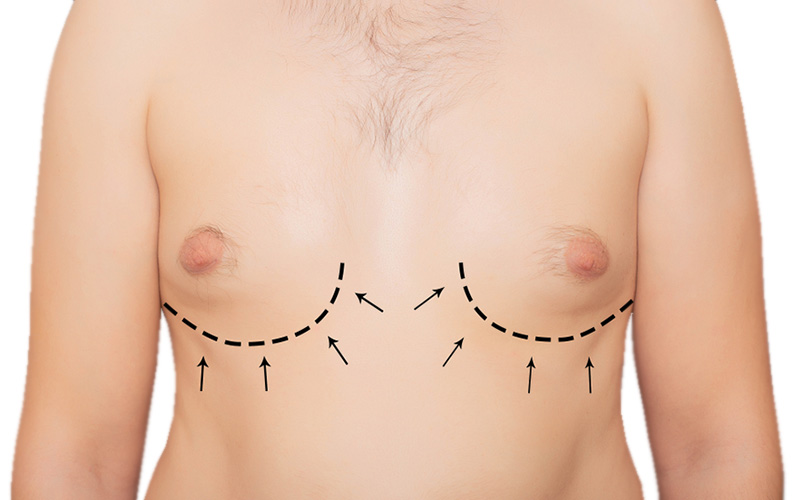
Gynecomastia, also known as male breast reduction, is the cosmetic procedure for the removal of excess fat and glandular tissue in order to restore a flatter and more masculine contour to the chest.
Hyperplasia of the male breast (that makes it resemble a female chest), is called gynecomastia. It is a common phenomenon in adolescents and adult men. It is attributed to the growth of the mammary gland, the excess fat accumulation in the breast area, or the combination of the two. It usually has no underlying pathological cause, except in some rare cases where the cause of gynecomastia is hormonal imbalance.
It usually begins at the age of 12-15 years and in most cases subsides 2-3 years later. In older people, the breast swelling is usually attributed to local fat deposition.
Gynecomastia is a condition that does not respond to a proper diet or exercise. As such, the gynecomastia procedure is the best treatment option offering permanent results.
Correction of gynecomastia helps men regain their self-esteem and confidence, since hypertrophic breasts put considerable strain on men and are psychologically distressing.
When gynecomastia is attributed to excessive fat accumulation in the breasts, then it is treated with the technique of liposculpture, using a fine liposuction cannula with small holes to extract excess fat. Usually, a saline solution with a local anesthetic and epinephrine is infused in the area under treatment, which allows the cannula to move more gently, facilitating the removal of fat.
When gynecomastia is attributed to mammary gland hyperplasia, surgical resection of the excess breast through a small semicircular incision at the lower border of the nipple is required. In certain cases, the incision is more extensive.
When it comes to combining fat accumulation and glandular growth, the above two techniques are combined for optimal results.
Proper operative technique and patient care prevent any possible complications. However, as with any surgery, events such as hematoma, which rarely require additional surgery, seroma, and loss of nipple sensation may occur.
Gynecomastia operation creates a more flat breast and, as a result, the body acquires a more masculine image. In combination with regular exercise and a balanced diet, men experience increased confidence and a more masculine chest appearance.
We use cookies to improve your experience on our site. By using our site, you consent to cookies.
Manage your cookie preferences below:
Essential cookies enable basic functions and are necessary for the proper function of the website.
These cookies are needed for adding comments on this website.
Google Tag Manager simplifies the management of marketing tags on your website without code changes.
You can find more information in our Cookie Policy and .